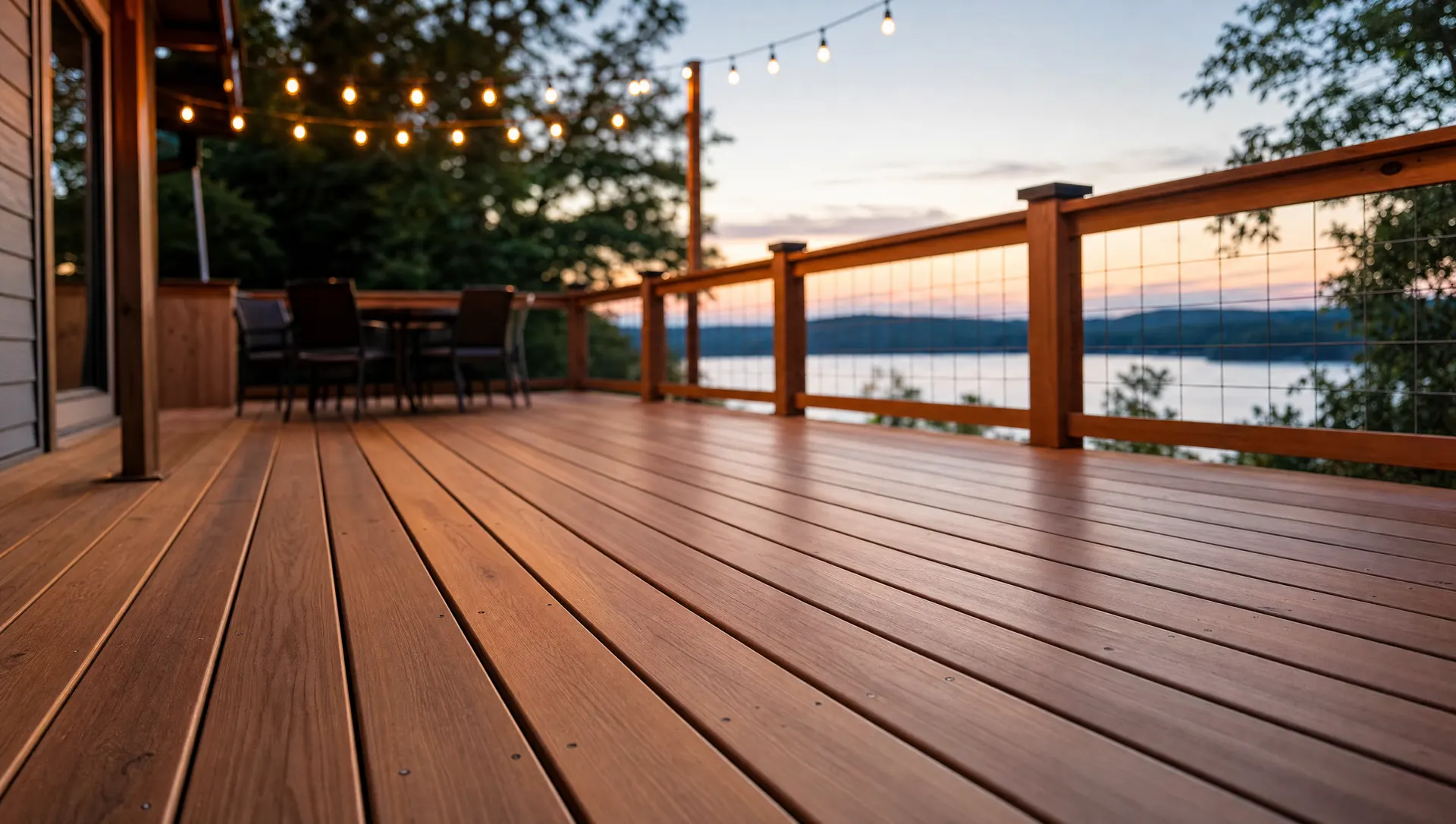
Deck Replacement & Repair in Lebanon, Missouri
A deck doesn't usually fail all at once. It starts with one board that flexes more than the others, a railing post with a little more wobble than it used to have, a gap where a board has pulled away from a joist. By the time it's obviously a problem, a deck in Lebanon has often been quietly getting worse for a couple of seasons already. Deck replacement and repair covers everything from a targeted fix on an otherwise sound deck to tearing out a structure that's past the point of patching and starting over.
Lebanon Deck Builders connects homeowners across Lebanon and Laclede County with local help sorting out which one your deck actually needs — and getting it done.
What's Included in Deck Replacement & Repair
Repair and replacement cover different kinds of work, and a lot of the job is figuring out honestly which category a given deck falls into:
- Board-level repair — replacing individual boards that have rotted, split, or cupped, without disturbing the rest of the deck
- Railing and stair repair — tightening or replacing loose posts, balusters, and stair stringers that have become a safety issue
- Structural repair — addressing ledger board attachment, beam or joist damage, and footing problems that affect the whole deck's stability
- Resurfacing — replacing the decking boards on top of a structure that's still structurally sound underneath, sometimes switching from wood to composite in the process
- Full replacement — removing an old deck down to the ground and building new when the structure is too far gone to save safely
The starting point for any of this is an honest look at what's actually wrong, not just what's visible from the top.
Repair or Replace? Reading Lebanon's Older Decks
A lot of decks around Lebanon are original to ranch-style homes built in the 1990s and 2000s, which puts a good share of the local deck stock into its third decade. Add in Missouri's hot, humid summers — hard on any exposed wood — and the pattern shows up often: boards that have grayed and cracked, fasteners that have backed out or rusted, and framing that's held moisture against it for years without anyone checking. Sun-bleached, splintery decking is usually a straightforward resurfacing job. A ledger board pulling away from the house, or a support post that's rotted at the base, is a structural problem, and that's where the honest answer is often full replacement rather than a repair that just delays the real issue.
When to Call for Deck Repair
A few signs are worth acting on rather than watching for another season:
- Boards that flex, feel soft, or show visible splitting when you walk on them
- Railings or posts that wobble when pushed — a real fall risk, not just cosmetic
- Gaps opening up where the deck meets the house, especially around the ledger board
- Visible rot, especially anywhere wood stays damp — under planters, around post bases, in shaded corners
- A deck that hasn't been stained or sealed in several years and has started to gray and crack
None of these get better by waiting. Wood that's already compromised keeps absorbing moisture every humid Missouri summer that passes.
A yearly walk-around is worth the ten minutes it takes. Check the ledger board where the deck meets the house, push on every railing post, and get down and look at the underside of the joists if you can reach them. Problems caught in the first season are almost always cheaper and simpler to fix than the same problem two winters later, after freeze-thaw cycles have had more time to work on a joint that was already loose.
What Deck Replacement & Repair Typically Costs
Cost depends heavily on what's actually wrong. A handful of replaced boards and some tightened hardware might typically run a few hundred dollars. A full resurfacing job — new decking and railing on a sound structure — typically lands somewhere in the $3,000 to $8,000 range depending on size and material. A full teardown and replacement is effectively a new deck build, which typically runs $25 to $75 per square foot depending on whether you choose treated wood or composite. The honest first step is an inspection to find out which category applies, since guessing from the surface usually undersells how much of the structure is actually affected.
How do I know if my deck needs to be replaced instead of repaired?
The clearest signals are structural, not cosmetic: a ledger board separating from the house, rotted or undersized support posts, footings that have shifted, or soft framing underneath the decking. Surface wear — graying, minor splinters, a board or two gone bad — is usually repairable. If more than a handful of boards are compromised, or if the problem is in the framing rather than the decking, replacement is usually the more honest answer than a repair that won't hold.
Is a wobbly railing actually dangerous?
Yes, treat it that way. A railing's job is to stop a fall, and a post that wobbles under hand pressure has already lost some of the connection that makes it work. It's one of the more common issues flagged during a home inspection, and it's usually a quicker, cheaper fix than most other deck repairs — no reason to leave it.
Can you switch from wood decking to composite during a repair?
Often, yes, if the underlying framing is sound. Resurfacing with composite decking on an existing structure is a common way to get composite's low-maintenance benefits without paying for an entirely new deck. The framing still needs to be checked first — composite decking can run heavier than wood, and old framing built for a lighter load needs to be confirmed before it takes on new material.
Get a Free Quote
Whether it's one soft board or a deck you're pretty sure has to come out, tell us what you're seeing and we'll get back fast with a free, no-pressure quote.
Ready for a Better Backyard in Lebanon?
Tell us what you're picturing and we'll get back fast with a free, no-pressure quote.